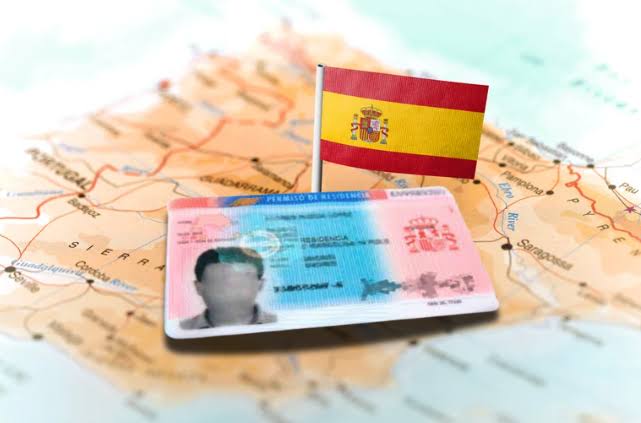
Spain Residency After the Golden Visa (2026)
Spain's Golden Visa ended in 2025. See the real 2026 residency routes for non-EU buyers: NLV, Digital Nomad Visa, and EU rules, with details.

The Spanish Golden Visa is gone. If you are a non-EU buyer who hoped to "buy a home and get residency," this guide is for you. You will learn what changed, the real visa routes that still work in 2026, and the exact income you need for each.
Quick answer: The Golden Visa (the old "buy property, get residency" scheme) ended on 3 April 2025. It is not coming back. But two main routes still work for non-EU buyers in 2026: the Non-Lucrative Visa (NLV) for people with passive income, and the Digital Nomad Visa (DNV) for remote workers. Buying a home and getting residency are now two separate things.
Here are the numbers that matter most in 2026, at a glance:
- NLV income: 2.400 euros per month
- DNV income: 2.849 euros per month
- 5 years to permanent residency
- 10 years to citizenship
Is the Golden Visa still available?
No. Spain closed the Golden Visa on 3 April 2025. A new law, Organic Law 1/2025, ended it for good. No new applications are accepted. There is no grace period and no replacement scheme.
This matters because many older articles still talk about the Golden Visa as if it exists. It does not. So if you read "invest 500.000 euros for residency," that advice is out of date.
The good news: Spain still has clear, legal routes to live here long-term. You just pick the route that matches how you earn your money.
Danger: Do not trust any service that still offers a "Spanish Golden Visa" in 2026. It does not exist. Any agent selling one is either out of date or trying to mislead you.
Why Spain abolished the Golden Visa
Spain ended the scheme to help with housing. The government said that residency linked to property was pushing up prices in busy areas. This made it harder for local people to buy or rent.
Spain is not alone. Portugal stopped its own property Golden Visa in 2023. The European Union also pushed member states to close these "residency by investment" schemes. So the change was expected.
The key point for you: residency and property are now fully separate. Buying a home gives you no visa. And you do not need to buy a home to get a visa.
Can non-EU buyers still buy property?
Yes, with no change. The end of the Golden Visa does not stop you buying a home on the Costa del Sol. British, Irish, American, Canadian and other non-EU buyers can still purchase freely.
What changed is only the residency link. You buy the home as a normal purchase. Then, if you want to live here, you apply for one of the visas below.
Because the visa "bonus" is gone, the quality of the property matters more than ever. You are buying for lifestyle and value, not for a visa. This is where an honest, buyer-side agent helps. At Spain Developments we work only for you, the buyer, never for the seller or developer. We help you find a sound new-build home and avoid the common traps.
The residency routes that work in 2026
For most non-EU buyers, two main routes apply. Here is a simple side-by-side view, with no jargon.
Non-Lucrative Visa (NLV)
For retirees and passive income.
- Can you work? No work at all, not even remote
- Income test 2026: 2.400 euros per month passive
- Buy property? Not required
- First permit: 1 year, then renewals
- Citizenship: after 10 years
Digital Nomad Visa (DNV)
For remote workers and freelancers.
- Can you work? Yes, but only for non-Spanish clients or employers
- Income test 2026: 2.849 euros per month gross
- Buy property? Not required
- First permit: up to 3 years if applied for in Spain
- Citizenship: after 10 years
There is also an Entrepreneur Visa for people who want to start a real business in Spain. It is judged on your business plan, not on property. It suits founders, not remote workers or retirees, so we keep the focus below on the two main routes.
Non-Lucrative Visa (NLV)
The NLV (the non-lucrative visa for people who live off passive income) is the classic "retire to Spain" visa. It is for people who can support themselves without a job in Spain. You cannot work on it, not even remote work for a foreign employer. If you need to work online, the NLV is the wrong route for you.
What you need in 2026:
- Passive income of about 2.400 euros per month. That is 28.800 euros per year. This figure is 400% of the Spanish IPREM index (a benchmark the government uses for income rules). The IPREM stayed at 600 euros per month for 2026, so the figure is stable.
- For each extra family member, add 600 euros per month (7.200 euros per year).
- Private health insurance with full cover in Spain and no co-payments (more on healthcare below).
- A clean criminal record certificate and proof of your funds.
No steady income? Use savings instead. Consulates usually accept savings that cover five years. For one person, that is about 144.000 euros (28.800 euros x 5). This shows you can support yourself across the first visa and its renewals.
Here is how the income test stacks up for a couple:
- Main applicant: 2.400 euros / month
- Spouse (one dependent): + 600 euros / month
- Couple total: 3.000 euros / month
- Or savings (5 years): **~ 180.000 euros**
Worked example for a couple. Say you buy a 500.000 euros new-build apartment near Estepona. For the NLV, you would need to show about 3.000 euros per month between you (2.400 for the main applicant plus 600 for your spouse). That is 36.000 euros per year. Or savings of around 180.000 euros. Note this is on top of the money for the home itself.
Bonus tip: You apply for the NLV at a Spanish consulate in your home country, not inside Spain. Start early. Many consulates book up weeks in advance, and your documents (like the criminal record check) have a short shelf life.
Digital Nomad Visa (DNV)
The DNV (the digital nomad visa for people who work remotely) is newer. Spain launched it in 2023 for remote workers. It is perfect if you want to escape grey winters, work from a sunny terrace, and keep your job or clients abroad.
What you need in 2026:
- Gross income of about 2.849 euros per month. This is 200% of Spain's minimum wage (the SMI).
- Add more for family. The usual rule is +75% of the SMI for your first dependent and +25% for each extra one.
- You must work for companies or clients based outside Spain. If you are employed, the company should have existed for at least one year.
- Private or public health cover, and proof of your work history or contracts.
A real bonus: lower tax. DNV holders can often apply for a special tax regime, sometimes called the "Beckham Law." It can let you pay a flat 24% on Spanish work income up to 600.000 euros per year, for up to six years. For higher earners, this is a big saving. Always check your own case with a tax adviser first.
Warning: The DNV is not for working with Spanish clients or a Spanish employer. If your income is local, you need a normal work permit instead. Mixing this up is a common reason applications get refused.
If you are an EU, EEA or Swiss citizen
Your path is far simpler. You do not need a visa at all. You have the right to live in Spain.
If you stay longer than three months, you do two things:
- Register as an EU resident. You fill in Form EX-18 and get a green residency certificate. It shows your name, NIE (your Spanish tax and ID number), and address. The fee is about 12 euros.
- Get on the padrón. This is the local town hall register (the empadronamiento). It confirms where you live and is needed for healthcare, schools, and more. It is usually done the same day.
To register, you show your passport, proof you can support yourself, and proof of health cover. That is the main difference from the old free-movement days: you must show you will not be a burden on the state.
Which route is right for you?
Use this simple logic:
- Do you work online for non-Spanish clients? The Digital Nomad Visa fits you.
- Do you live off a pension, savings, rent, or investments, with no work? The Non-Lucrative Visa fits you.
- Are you an EU, EEA or Swiss citizen? You skip visas and just register.
- Do you want to run a business in Spain? Look at the Entrepreneur Visa.
Still unsure? That is normal. The wrong choice can cost you months. Spain Developments connects buyers to trusted immigration partners who speak your language and check your exact case before you apply. We help with the property; they handle the visa detail.
From visa to permanent residency and citizenship
The routes above are not dead ends. They build towards something more secure.
- First permit (NLV or DNV). You start with a 1 to 3 year permit, then renew it. This is the first step on the path.
- After 5 years: permanent residency. Five years of legal residence unlock permanent residency. This gives you long-term security and easier rules.
- After 10 years: citizenship. Ten years can lead to Spanish citizenship and an EU passport. Some nationalities qualify faster, such as citizens of many Latin American countries, after just 2 years.
So the NLV or DNV is the first step on a longer path, if you want it.
Common worries, answered
"The bureaucracy scares me." It is real, but it is a known process. With the right documents and a local lawyer, it is very doable. Thousands of people from the UK, Ireland and beyond do it every year.
"Can I do this from abroad?" Yes. NLV and DNV applications usually start at a Spanish consulate in your home country. You do not need to be living in Spain to begin.
"What about my family?" Both main visas let you bring a spouse and dependent children. You show extra income for each person, as listed above.
"Is the Golden Visa really gone?" Yes. It ended on 3 April 2025. Do not trust any service offering a new Spanish Golden Visa. It does not exist.
A quick recap of who fits where:
- Live off savings or a pension? The Non-Lucrative Visa is your route.
- Work remotely? The Digital Nomad Visa fits you.
- EU, EEA or Swiss? No visa needed. Just register on arrival.
In short
The Golden Visa is over, but your dream of a sunny home and a real life in Spain is not. If you live off savings or a pension, the Non-Lucrative Visa is your route. If you work remotely, the Digital Nomad Visa fits. EU citizens just register and go.
When you are ready to find the right new-build home on the Costa del Sol, and to be introduced to honest partners for your visa, Spain Developments is here to help. Reach out for a friendly, no-pressure chat.
Written by
Samuel Sprenar